Classic Role-Playing Games: What to Play and Where
A practical guide to classic role-playing games: the landmark titles, what defines each era, and how to play retro RPGs online for free in your browser.
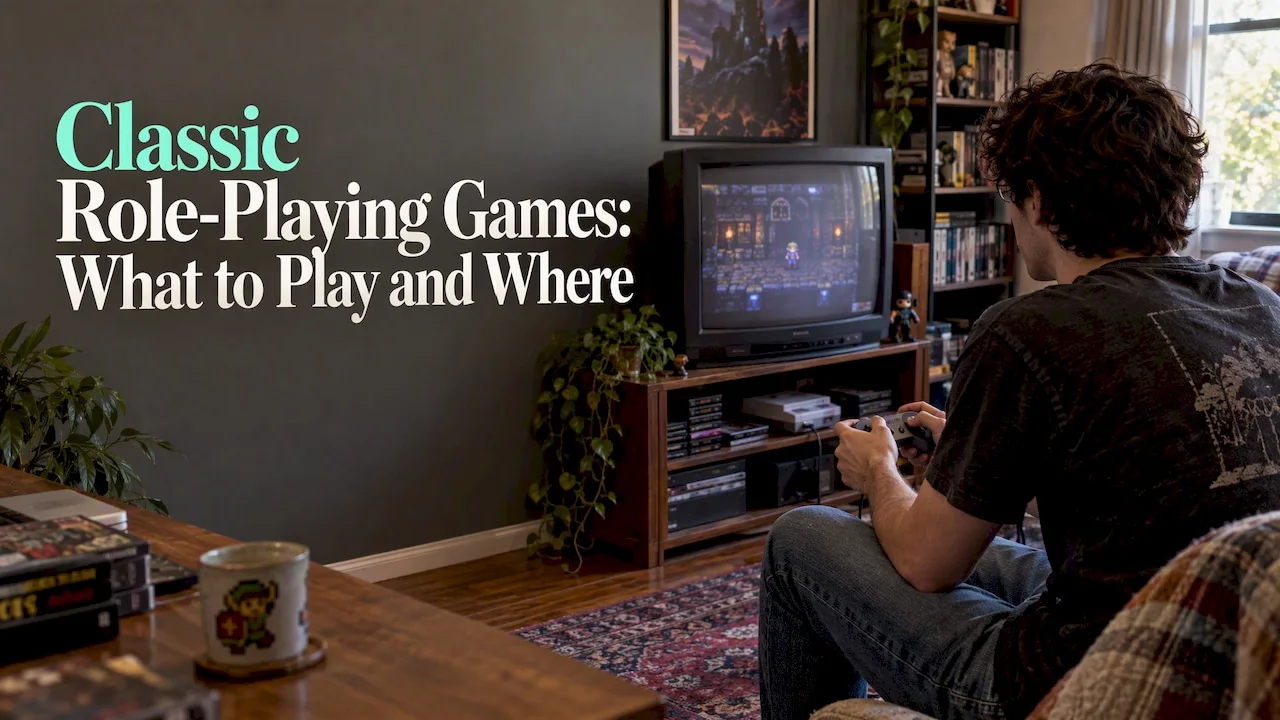
Classic role-playing games are the RPGs from roughly 1981 to the mid-2000s that built the genre: Ultima, Dragon Quest, Final Fantasy, Fallout, Baldur’s Gate and Morrowind. You can still play many of them today. Some are sold on modern storefronts, a few are free from their creators, and hundreds of retro RPGs run straight in a browser with no download and no account. This guide explains what makes an RPG a classic, which eras and styles to try first, and how to start playing in a minute.
TL;DR
-
A classic RPG is built on story, character growth, quests and exploration. The genre grew out of tabletop games and early computer experiments in the 1970s.
-
The landmark titles split into three families: Western computer RPGs, Japanese console RPGs and action-leaning RPGs.
-
Free, legitimate options exist: browser retro libraries, a few creator-released games and open-source projects such as Crawl.
-
On our RPG page you can play 685 retro RPGs free in your browser, with no sign-up and no download.
-
Start with short, forgiving games, learn the genre’s habits, then move to the deep, slow ones.
Table of Contents
What makes a role-playing game a classic
The core of any RPG is simple. You control a character or a party, you follow a story, and you get stronger through levels or skills. According to the overview of the genre, RPGs generally feature detailed stories and character advancement, almost always include combat, and typically revolve around quests.
“Classic” adds a few things on top:
-
It defined a convention. Turn-based party combat, class systems, overworld maps, dungeon crawling. Later games copied it.
-
It is still fun without nostalgia. Good pacing and clear rules outlast sharp graphics.
-
It has a distinct identity. You can describe a classic in one sentence, such as time travel across five eras or a prophesied hero returning to a cursed land.
There is no official cutoff. Most players use “classic” for games from the genre’s birth through the 3D transition and the early PC and console generations, so about 1981 to 2005. That window is wide enough to include text-heavy computer RPGs, 16-bit console epics and early 3D worlds.
Where the genre came from
RPGs began on the tabletop. Dungeons & Dragons gave designers the vocabulary of classes, hit points, experience and quests. The same overview notes that the first computer versions appeared on university mainframes in the mid-1970s, and that the genre later split into console franchises such as Dragon Quest and Western computer series such as Fallout and Baldur’s Gate.
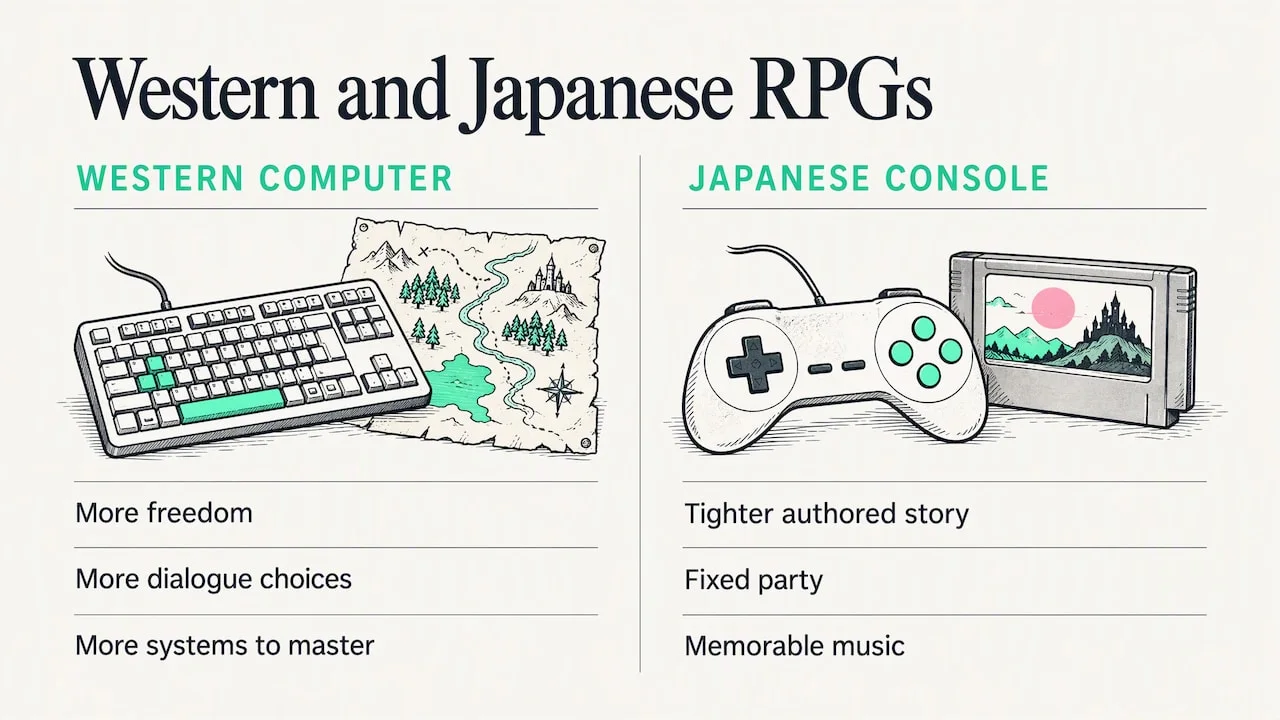
That split still shapes how you choose a game today. Western computer RPGs tend to give you more freedom, more dialogue choices and more systems to master. Japanese console RPGs usually give you a tighter, more authored story, a fixed party and memorable music.
Landmark classics worth knowing
Here is a map of the titles that come up whenever players list the greats. Release details come from the publishers where noted.
| Game | Era | Style | Why it matters |
|---|---|---|---|
| Ultima I: The First Age of Darkness | 1981 | Western computer RPG | Early open-world fantasy quest to stop Mondain’s creatures |
| Dragon Quest series | 1980s onward | Japanese console RPG | Set the template for simple, approachable turn-based RPGs |
| Final Fantasy III | Original 1990s console era, later remakes | Japanese console RPG | Job-style character development, a crystal-driven story |
| Chrono Trigger | 1995 | Japanese console RPG | Time travel across five eras, combined attacks |
| Final Fantasy VII | 1997 | Japanese console RPG | Brought the genre to a global audience |
| Fallout and Baldur’s Gate | Late 1990s | Western computer RPG | Deep choices, consequences and party tactics |
| The Elder Scrolls III: Morrowind | 2002 | Open-world RPG | A vast, strange world and a prophecy-driven quest |
| Tales of Symphonia | 2000s | Action RPG | Real-time battles with a co-op option |
A few details are worth knowing. Electronic Arts lists Ultima I with a July 9, 1981 release date. Bethesda describes Morrowind as a story in which a reincarnated hero, Nerevar, is prophesied to arrive and rid the land of a curse, while an imperial courier takes on dangerous, magical quests on the island of Vvardenfell.
Many of these games have been remade or re-released for modern systems, and those editions are usually sold. The original versions are the ones that retro libraries preserve, and they are the ones this guide focuses on.
Three styles of classic RPG, and who they suit
Picking by style saves time. Most disappointment comes from starting with the wrong kind of RPG.
Turn-based party RPGs
You choose actions for each character, then watch the round play out. These are the easiest to pick up and the best for short sessions, because you can stop at any point on the map. If you want a first game, start here.
Western computer RPGs
These lean on exploration, text and stats. Expect to read, map areas and manage inventory. They reward patience. If you like Fallout-style consequences or grid-based dungeon crawling, this is your corner of the genre.
Action RPGs
Combat happens in real time, and character growth runs behind it. These suit players who want to jump in and fight. Action RPGs also tend to be the most forgiving to return to after a long break, since the controls explain themselves.
A fourth group is worth a mention: games that borrow RPG ideas while living in other genres. The genre overview points out that many games include role-playing elements such as character advancement and quests while remaining in other categories. If a pure RPG feels heavy, try an adventure game or a strategy game with unit leveling, then work your way back.
Do you have to download, pay or use an emulator?
It depends on where you play.
-
Modern storefront editions of the big names are usually paid, and they install on a PC or phone. A publisher page such as Square Enix’s listing for Final Fantasy III shows the remake available on Steam, iOS and Android.
-
Creator-released freebies exist. Falcom’s official page says its simulation RPG Vantage Master is available in English for free, with no registration and no payment.
-
Open-source projects can be free and legal. Dungeon Crawl Stone Soup is developed in the open, and can be played online in a browser against other players or by watching them.
-
Fan ports sometimes need your own copy of the original. The SDLPAL web demo, for example, needs data files from a licensed copy of the game.
-
Browser retro libraries run the original games in a tab. That is the route with the least friction: no install, no hardware setup, and it works on a phone.
If a site demands your payment details for a game that is decades old, or asks you to install an unknown program just to play, look elsewhere.
Perspective: why we think browser play suits classic RPGs
Classic RPGs are long, but they are made of small pieces: one dungeon, one town, one boss. That structure fits a browser tab better than almost anything else.
We built Back2OldGames around a plain idea. Retro games should be one click away, free, and private. No download, no sign-up, no subscription. Our site is supported by hand-picked sponsorships rather than ad networks or payments from players, so you can sit down with a 30-year-old dungeon crawler without being asked for anything.
What we see in the RPG corner is that people rarely want a single famous title. They want to rediscover a game they half remember, or try a genre they missed as kids. A big library with simple browsing serves that better than a short list. That is why we keep the full catalog open, and why features like the Retro Passport, where you collect stamps and earn experience points, sit on top as an option rather than a requirement.
If you take one habit from us: give a classic RPG an hour before you judge it. The first twenty minutes are always the roughest.
Jack The Mayor
How to start playing classic RPGs online
A simple path that works for most people:
-
Pick a style. Turn-based for relaxed play, Western for depth, action for speed.
-
Open the RPG library. On our retro RPG page you can browse 685 titles by name and start any of them in your browser.
-
Check the platform. Original consoles and computers handled controls differently. Our platform index groups games by system, so you can browse one hardware generation at a time.
-
Learn the controls first. Spend two minutes on the keyboard or touch setup before starting a story.
-
Save often. Many old RPGs have harsh difficulty and can strand you without warning. Use any save option the game gives you, and make a fresh save before every boss or dungeon.
-
Set a goal. Reach the first town, finish the first dungeon, level one character to a set number. Small goals keep long games manageable.
Playing on a phone
Browser play works on mobile, and we also have an Android app. Turn-based RPGs are the best fit for touch screens, since they do not depend on fast reflexes. Hold the phone in landscape and give yourself a few minutes to learn the on-screen controls.
Tips for enjoying older RPGs
Older games have habits modern ones dropped. Knowing them in advance removes most of the friction.
-
Expect grinding. Many classics assume you will fight extra battles to level up. Treat it as part of the rhythm, not a failure.
-
Take notes. Without a quest log, a pen and paper helps. Write down town names, clues and passwords.
-
Do not fear the menus. Equipment, spells and stats drive the whole experience. Reading them is half the game.
-
Try a different era. If 16-bit visuals do not appeal, move to the 3D-era games on systems like the 3DO or PSP.
-
Look at the charts. Our Hall of Fame and rankings show what other players rate highly, which is a good shortcut when the library feels huge.
Keep coming back: daily challenges and recommendations
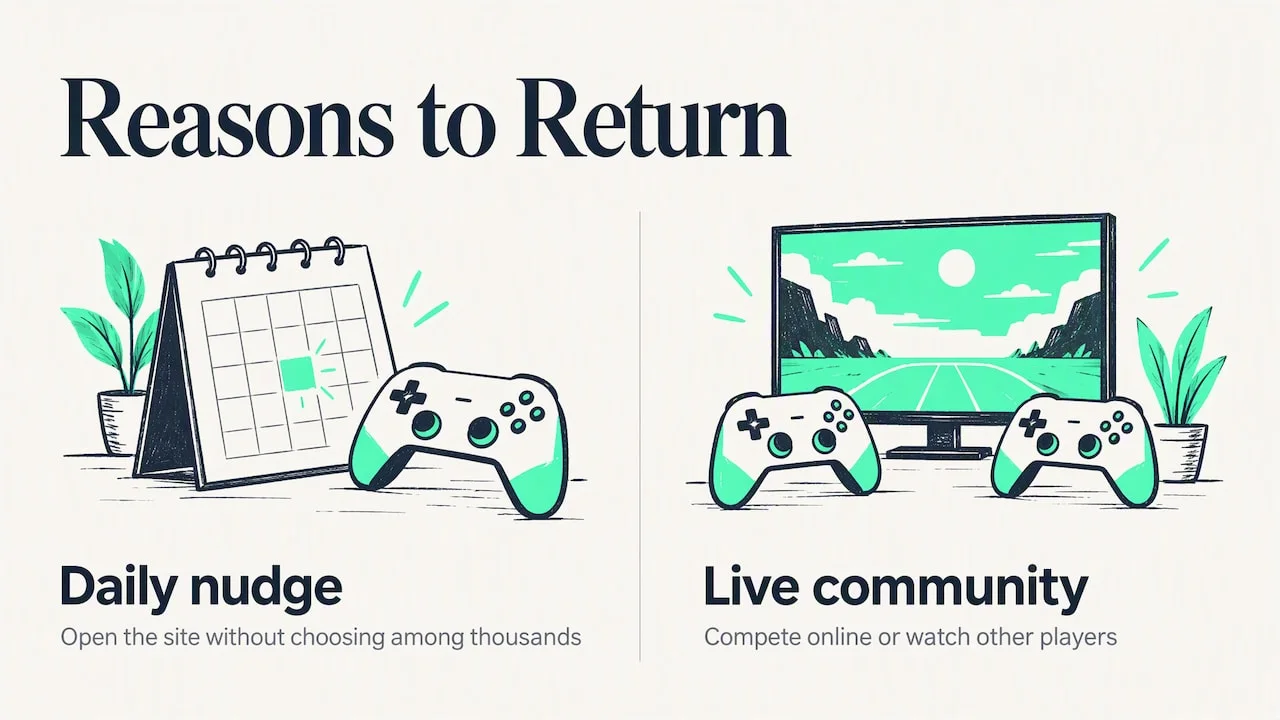
One common worry with old RPGs is that they are long and easy to drop. Two things help. First, a daily nudge: our daily challenges and game recommendations give you a reason to open the site without choosing from thousands of titles. Second, some free games have a live community. Crawl, for example, lets you compete against other players online or watch them play, which makes a very old genre feel current.
Play classic RPGs free with Back2OldGames
We offer over 16,000 classic retro games that you can play free in your browser, with no sign-up and no download. That includes 685 RPGs, plus neighboring genres if you want a change of pace.
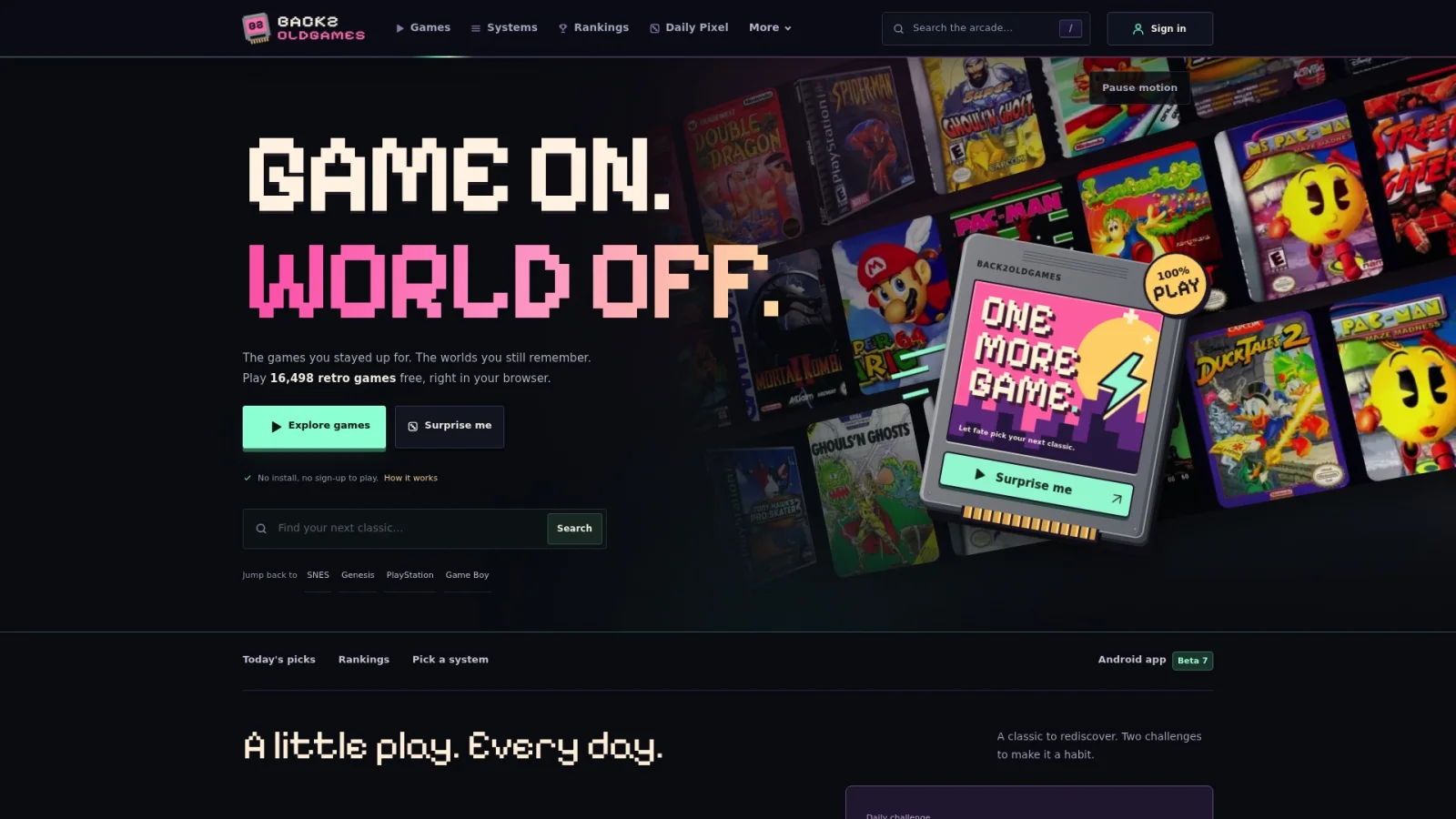
Start with the full retro RPG library, or open the home page and see what the daily recommendation is. If you cannot find a game you remember, you can request it here.
FAQ
What counts as a classic role-playing game?
There is no official definition. Most players mean RPGs from the genre’s earliest days through the mid-2000s, roughly 1981 to 2005. A classic is a game that set conventions others copied and is still enjoyable to play now.
Can I play classic RPGs online for free?
Yes. Some creators release games free, such as Falcom’s Vantage Master, and open-source RPGs like Crawl are free to play. Browser libraries like ours also let you play retro RPGs at no cost, with no registration.
Do I need an emulator to play old RPGs?
Not when you play in a browser, because the game runs in the page itself. Installing games on your own device may require an emulator or a fan port, and some of those need data files from a copy of the game you own.
Which classic RPG should a beginner try first?
Start with a turn-based Japanese-style RPG, since the rules are simple and you can stop at any time. Once you are comfortable, try a Western dungeon crawler for more depth, or an action RPG if you prefer fast combat.
Can I play retro RPGs on my phone?
Yes. Browser play works on mobile, and there is a free Android app. Turn-based games work best on a touch screen.
Sources
Recommended
Keep reading.

Old Fighting Games: The Classics That Built the Genre
A guide to old fighting games from Karate Champ to Street Fighter II and Mortal Kombat: what made each one matter and how to play retro fighters free online.
Read the story
Sonic 3 & Knuckles Online: How to Play the Full Game in Your Browser
Want to play Sonic 3 & Knuckles online? Learn what the combined game is, how lock-on works, which characters to pick, and how to find it in your browser.
Read the story